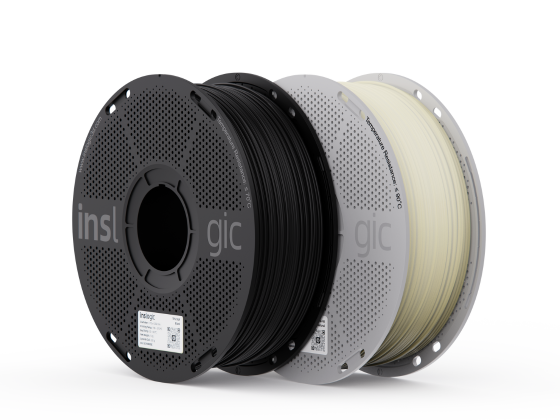



Opened filament does not have one universal storage routine. Some users leave frequently used PLA on the printer or a shelf. Others use sealed bags or boxes with desiccant. Each method can work for the right material, climate, and printing frequency.
The friction appears when several spools stay open and materials rotate frequently. A storage step gets skipped, desiccant is not checked, or a spool stays on the bench because the next job is already waiting.
Days later, that spool goes back into rotation. Now you hear popping at the nozzle. Stringing gets worse. The surface looks rough. Instead of starting the next print, you may be drying filament again and waiting for it to recover.
Filament storage should protect your workflow—not become another job inside it.
Why Passive Storage Stops Scaling
Vacuum bags can be practical for occasional or long-term storage, while sealed boxes with desiccant work well for frequently used spools. The problem is not whether these methods work. It is how much manual attention they require as the collection grows.
Each spool still depends on an individual seal, container, or desiccant pack. With a few rolls, that may be easy. With frequent material changes and a growing inventory, those small steps multiply.
That is the gap the FilaDC i10 is designed to close: keeping multiple spools together while actively managing one shared storage environment.

The i10 Actively Manages the Storage Air
The i10's sealed door uses a gasket and three strong magnets to reduce outside air exchange. Inside, a molecular sieve adsorbs moisture from the cabinet air. When the sieve becomes saturated, the i10 automatically regenerates it using a PTC heating element and internal airflow, then returns to dehumidification.

The filament chamber stays near room temperature, and listed operating noise is at or below 30 dB. The cabinet keeps working between prints without asking you to maintain every spool's storage individually.

A Practical Humidity Target
The i10 offers an adjustable range of 10%–45% RH, with a stated accuracy of ±5%. Inslogic's storage reference places 3D-printing materials in a low-humidity band of roughly 5%–25% RH. Because the i10's adjustable lower limit is 10%, 10%–25% RH is a practical in-cabinet reference for filament storage, followed by the material manufacturer's guidance.

- PLA and less moisture-sensitive materials: Below 30% RH is a useful starting point.
- PETG, TPU, PC, PVA, and other moisture-sensitive materials: Favor the lower end of the i10's range when recommended by the filament maker.
- Nylon and highly hygroscopic engineering materials: Dry the spool correctly first, then store it at low humidity to reduce re-exposure.
The goal is not simply to chase the lowest number. It is to keep the storage environment stable and appropriate for the material.
From Storage Chores to One Cabinet
| Moment | Individual passive storage | FilaDC i10 |
|---|---|---|
| After a print | Return each spool to its container—or leave it exposed | Return the spool to one centralized cabinet |
| Between jobs | Rely on seals and check desiccant manually | Active dehumidification manages the cabinet air |
| When the desiccant is saturated | Replace or regenerate it yourself | The molecular sieve regenerates automatically |
| As your spool count grows | Add more containers, labels, and maintenance | Store up to ten standard 1 kg spools in one system |
The old loop often looks like this:
Print → store passively or leave exposed → moisture returns → dry again → wait
With the i10:
Dry when needed → store in the i10 → keep the storage air controlled → choose the next spool
Built for More Than One Open Spool
The i10's two-level cabinet measures approximately 385 × 258 × 488 mm internally and holds up to ten standard 1 kg spools. It can also support combinations from 250 g to 5 kg, depending on spool dimensions and cabinet layout.

That makes it especially useful for:
- Print farms: Rotate materials across multiple machines without sending every spool through a separate storage routine.
- Studios, workshops, and labs: Keep shared colors and materials organized in one controlled location.
- Humid or coastal workspaces: Reduce repeated exposure during rainy seasons and high-humidity periods.
- Long-job and backup-spool workflows: Keep the next roll protected and accessible while another spool is printing.
The i10 is not simply another container. It replaces a mix of exposed shelves, individual boxes, and maintenance reminders with one active storage system.
One Cabinet, More Than Filament
The i10 is designed around filament, but its adjustable 10%–45% RH range can also support other compatible moisture-sensitive items when their storage requirements match the selected setting.
- Camera bodies, lenses, and optical accessories: Use the upper part of the i10's range that overlaps with the equipment maker's guidance—typically around 40%–45% RH within the i10's supported range—and store gear only after it is clean and dry.
- Unpowered electronic components: Use controlled storage only when the component manufacturer permits the selected RH range.
- Selected moisture-sensitive powders: Keep them sealed in compatible containers and follow the supplier's storage instructions.
Do not use the i10 for loose powders, food, medicine, batteries, or flammable, reactive, toxic, corrosive, or contamination-sensitive materials. It is a humidity-controlled cabinet, not a substitute for regulated storage.
Heated Dryer vs. Dehumidifying Cabinet
| Question | Heated filament dryer | FilaDC i10 |
|---|---|---|
| What does it solve? | Moisture already absorbed by a wet spool | Humidity around stored spools and re-exposure between jobs |
| How does it work? | Uses material-specific elevated heat | Uses room-temperature molecular-sieve adsorption with automatic regeneration |
| When do you use it? | For recovery before printing | For continuous storage between prints |

If a spool is already wet—especially nylon or another highly hygroscopic material—dry it at the temperature recommended by the filament manufacturer. Once it is dry, place it in the i10 so the storage environment stays controlled.
Use heat to recover wet filament. Use active storage so you do not have to keep starting over.
Make Filament Storage the Easy Part
Your printers already have enough to do. Filament storage should not add another queue of exposed spools, individual containers to check, silica gel to restore, or materials to dry again.
The Inslogic FilaDC i10 combines active molecular-sieve dehumidification, automatic regeneration, adjustable low-humidity storage, a sealed cabinet, and capacity for up to ten standard 1 kg spools.
For print farms, studios, labs, and anyone managing multiple open rolls, it turns storage into one simple habit:
Finish the print. Put the spool back. Keep moving.