

(Strength, Flexibility, Aesthetics & Functional Parts Guide)
Choosing the right 3D printing filament is not about picking the most popular material — it’s about matching material properties to application requirements.
At Inslogic, we focus on performance-driven materials. This guide will help you select the best filament based on mechanical strength, flexibility, surface quality, and functional durability.

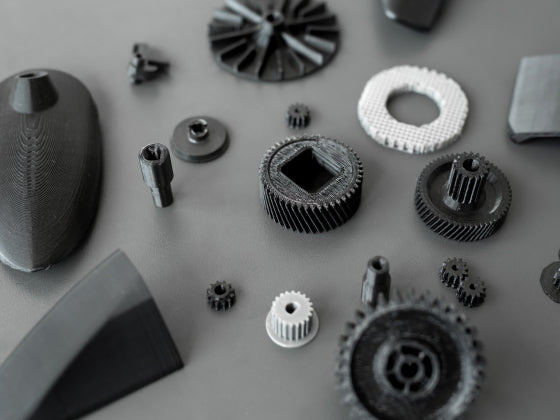
1. For High Strength & Load-Bearing Parts
Typical applications:
-
Mechanical brackets
-
Tooling components
-
Structural parts
-
Functional prototypes
High-strength applications require:
-
High tensile strength
-
Impact resistance
-
Layer adhesion stability
-
Heat resistance
Recommended Materials:
-
Nylon (PA6/PA12)
-
Carbon Fibre Reinforced Filaments (PA-CF, PETG-CF)
-
ABS-GF (Glass Fibre Reinforced ABS)
-
PC
-
PEEK
Technical Rationale
Nylon (PA6 / PA12) offers excellent toughness and fatigue resistance, making it suitable for dynamic or repeated-load environments.
Carbon fibre reinforced filaments improve stiffness and dimensional stability while reducing warping.
ABS-GF enhances stiffness, heat resistance, and dimensional stability compared with standard ABS. The addition of glass fibres reduces shrinkage and deformation, making it suitable for structural housings and automotive components.
PC delivers high impact resistance and thermal stability, ideal for structural parts with moderate heat exposure.
PEEK is for extreme engineering applications, with exceptional high-temperature endurance, chemical resistance, and mechanical performance.
Best choice: Functional mechanical components where failure is not acceptable.
2. For Flexible & Impact-Absorbing Parts
Typical applications:
-
Seals and gaskets
-
Phone cases
-
Wearable components
-
Vibration dampers
Flexible applications require:
-
High elongation at break
-
Elastic memory
-
Shock absorption
Recommended Materials:
-
TPU (Thermoplastic Polyurethane)
Technical Rationale
TPU allows bending and stretching without permanent deformation. Different Shore hardness levels (e.g., 95A vs 90A) determine softness.
Best choice: Parts that must bend, compress, or absorb energy.

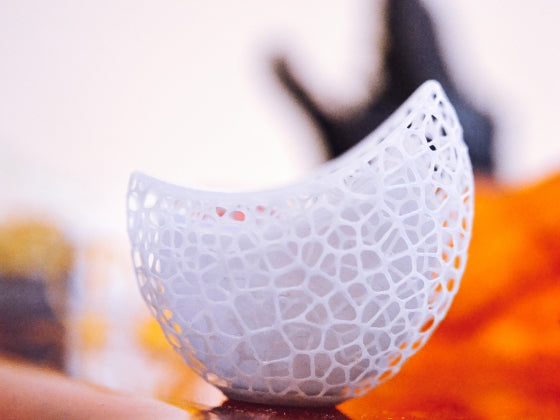
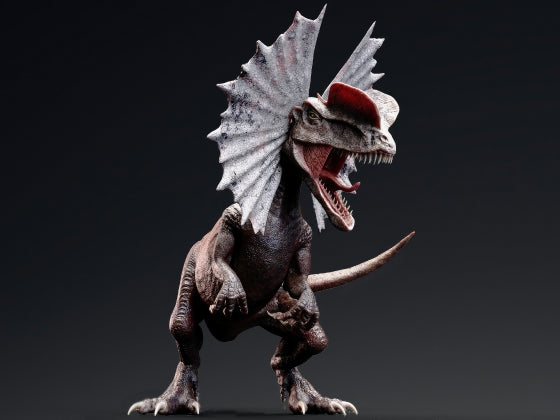
3. For Aesthetic & Display Models
Typical applications:
-
Figurines
-
Display prototypes
-
Decorative pieces
-
Concept models
Aesthetic parts require:
-
Smooth surface finish
-
Rich color options
-
Easy printability
-
Minimal warping
Recommended Materials:
-
PLA
-
Silk PLA
-
Matte PLA
-
WoodFill PLA
Technical Rationale
PLA offers excellent print stability and fine surface texture. For ultra-high detail and smoothness, resin printing provides superior resolution.
Resin printing achieves higher resolution and surface smoothness for detail-intensive projects.
Best choice: Visual-focused projects where appearance matters more than strength.
4. For Functional Household & Furniture Components
Typical applications:
-
Cabinet hinges
-
Replacement knobs
-
Appliance parts
-
Fixtures
-
Outdoor fixtures (lamp covers, garden tools)
Home-use functional parts often require:
-
Moderate strength
-
Temperature resistance
-
Wear resistance
-
Long-term durability
-
UV and weather resistance (for outdoor parts)
Recommended Materials:
-
PETG
-
ABS
-
Nylon
-
ASA
Technical Rationale
PETG offers chemical resistance and structural reliability for general-use components.
ABS performs well under moderate heat but has limited UV resistance.
Nylon is ideal for moving parts due to its wear resistance and low friction.
ASA is the preferred outdoor material, offering exceptional UV and weather resistance while maintaining strength and surface quality.

5. For Heat-Resistant Applications
Typical applications:
-
Automotive interior components
-
Electronics housings
-
Tooling parts
-
Aerospace and industrial machinery components
Performance Requirements:
-
High Heat Deflection Temperature (HDT)
-
Structural stability under thermal load
-
Resistance to UV, chemicals, or moisture (depending on application)
Recommended Materials:
-
ABS
-
ASA
-
PC
-
Carbon Fibre Reinforced Nylon
-
PEEK
Technical Rationale
ABS offers moderate heat resistance but limited outdoor durability.
ASA provides excellent thermal and UV stability for outdoor/automotive parts.
PC delivers high impact resistance and thermal stability for load-bearing components.
PEEK is for extreme environments with high temperature, chemical exposure, or mechanical stress.
CF-reinforced Nylon ensures dimensional stability under heavy loads.
6. Summary Table
Application Type |
Recommended Material |
Key Property |
|---|---|---|
| Structural Parts | Nylon, PA-CF, ABS-GF, PC, PEEK | Strength & stiffness |
| Flexible Parts | TPU | Elasticity |
| Display Models | PLA, PLA Silk/Woodfill/Matte | Surface quality & fine details |
| Household Parts | PETG, ABS, Nylon, ASA | Durability, UV & weather resistance |
| Heat/Industrial Parts | ABS, ASA, PC, PEEK, CF-Nylon | Thermal & mechanical stability |

Key Factors Before Choosing Filament
-
Load requirement (static or dynamic?)
-
Environmental exposure (heat, moisture, UV, chemicals?)
-
Required flexibility or rigidity
-
Surface quality expectation
-
Printer compatibility: nozzle temp, heated bed, enclosure, hardened nozzle for composites?
-
Long-term reliability vs cost trade-off
Final Thoughts
There is no “best filament” — only the best filament for your specific application.
By aligning performance characteristics with project requirements, you improve:
-
Print success rate
-
Part reliability
-
Long-term durability
-
Cost efficiency
At Inslogic, we develop materials designed for both everyday creators and engineering professionals. Start with your application requirements, and let material science guide your filament choice.


