
Welcome back to Inslogic Lab Notes. Today, we are focusing on an engineering material that many makers love to hate: Polypropylene (PP).
If you have ever tried to print PP, you probably know the exact sound of a part popping off the build plate mid-job, followed by the frustrating sight of a severely warped base. It is a notoriously stubborn filament, but those who master it unlock one of the most versatile materials in additive manufacturing.
Why Put Up With PP? The Power of Polypropylene
With its high failure rate for beginners, you might wonder why industrial farms and advanced makers keep coming back to PP. The answer lies in its extreme physical and chemical properties.
According to our lab's Technical Data Sheet (TDS), Inslogic PP offers some remarkable capabilities that standard materials simply cannot match:
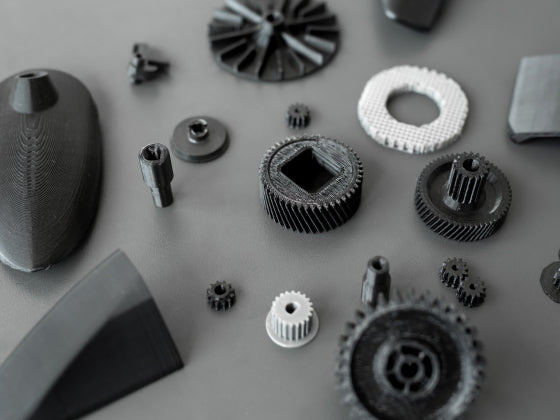
- Extremely Lightweight: With a density of just 0.9 g/cm³, PP is one of the lightest 3D printing polymers available, making it perfect for drone components and weight-sensitive robotics.
- Unmatched Resilience: PP features an astounding Elongation at Break of 999%. It doesn't snap under stress; it stretches and absorbs impact, which is why it is the ultimate choice for living hinges and snap-fit joints.
- High Chemical Resistance & Food Safe: It stands up to harsh solvents and is suitable for contact with food, making it ideal for agricultural production parts, chemical resistant piping, and food-safe containers.
The Physics of Warping: Why PP Shrinks
So, if it is such a powerhouse, why does it warp so aggressively?
Unlike amorphous polymers (like PLA or ABS) that cool relatively evenly, PP is a semi-crystalline polymer. It features high inherent shrinkage. As the extruded molten plastic cools to room temperature, its polymer chains quickly pack together into organized crystalline structures. This rapid crystallization causes the overall volume to shrink dramatically.
If the bottom layers cool too fast or lose their grip on the bed, that internal shrinkage pulls the corners of your print straight up into the air, ruining your dimensional accuracy.
How to Force PP to Cooperate
Beating the warping curse requires you to control the cooling process and secure the first layer with absolute certainty. You cannot simply use a standard PEI plate with a glue stick and hope for the best.
We've spent countless hours in the lab dialing in the perfect environment to tame PP. Instead of a massive wall of text, we compiled our findings into a quick, step-by-step video guide. It covers everything from dedicated PP build plates to exactly how you should configure your part cooling fan speeds (hint: you want 0% fan speed for the first few layers).
Watch: 5 Practical Tricks to Fix PP Warping & Adhesion Issues
Start With the Right Raw Material
Even with an enclosed chamber and perfect slicer cooling settings, you cannot out-tune bad filament. Because PP is naturally prone to distortion, relying on a stable, high-purity raw material is non-negotiable.
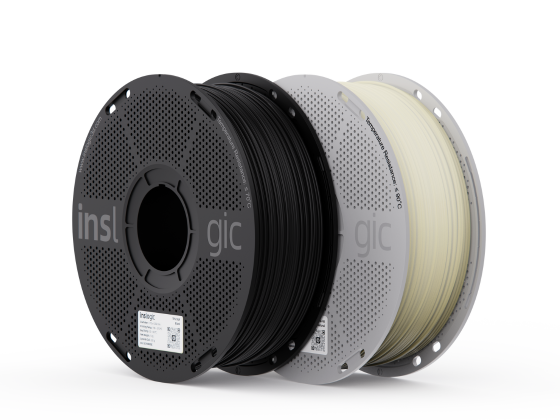
Inslogic PP filament is manufactured from high-quality raw materials to deliver consistent extrusion, excellent inner-layer adhesion, and reliable mechanical strength. Our spools come pre-dried, so you can load them up and start calibrating your prints right away.
Stop fighting your filament and start printing functional, chemical-resistant parts today.